
Engorgement: management, possible outcomes, and what doesn't help
Management of engorgement: key principles
Here are the key principles of management of engorgement, a generalised and typically bilateral acute inflammation of lactating breasts.
-
Frequent flexible breastfeeds (Principle #1). Information about the importance of frequent letdowns is available here.
-
Resolve any nipple and breast tissue drag or positional instability (Principle #2), discussed in considerations of the gestalt method. A gestalt fit and hold intervention, including side-lying breastfeeds, is an essential intervention for engorgement, if the baby is having difficult breastfeeding.
-
Reverse pressure softening prior to bringing baby on, if there is difficulty bringing the baby on.
-
Gentle manual expression to relieve tightness of breasts if baby satiated and not interested in taking the breast. Manual expression is not as effective as baby's intra-oral vacuum for milk removal but has a place in the management of breast inflammation including engorgement for some women. Manual expression risks backpressure and micro-vascular trauma and should be used carefully, without causing pain. Gentle manual expression applies sensory stimulation to the breast and nipple, using positive pressure to press residual milk in the ducts toward the nipple. This triggers the alveolar contractions and ductal dilations of milk ejection. There is a video showing how to do manual expression here.
-
Some women with generous breasts may feel relief from the engorgement when they very gently move their breasts with the palms of their own hands (Principle #3). They may like to do this in a warm or hot shower. You can read when this might be useful here.
-
If the engorgement develops during weaning, the mother applies Principle #4, here. When her breasts run full, her milk production is being downregulated due to the effects of backpressure in the alveoli. However, clinical presentations of breast inflammation need to be avoided. She needs to either
-
Weaning from the breast in a more gradual way, or
-
Hand express or pump milk from her breasts to comfort, to resolve the engorgement and prevent mastitis.
-
-
Have as much rest as possible.
When the mother is in crisis with acute pain and an infant who is unable to remove her milk by direct breastfeeding, try
-
Gentle manual expression of breast milk by the clinician during the consultation
-
Having the patient try gentle pump on low settings.
-
Highest safe doses of non-steroidal anti-inflammatory medications.
[The popular advice to avoid increasing milk production beyond baby's needs is not relevant either for
-
Engorgement in the first week after the birth, because the primary concern is to relieve the engorgement, or
-
Engorgement later in the course of lactation, or with weaning, because the primary concern is to relieve the engorgement,
rather than risk progressive and perhaps increasingly localised breast inflammation and tissue necrosis or abscess formation.]
Potential consequences of engorgement
In the context of underlying clinical breastfeeding problems, restrictive feeding practices, or inadequate frequency of breastfeeds, engorgement may quickly develop into
-
Intense, localised areas of inflammation (commonly referred to as mastitis)
-
Decreased supply (due to alveolar rupture and involution) so that the infant's needs aren't met from the mother's milk production, and
-
Premature introduction of formula or weaning.
Ceasing to offer baby the breast or to hand express breastmilk risks worsened outcomes and is not helpful advice
Clinicians encourage women to be sensible, and take breaks, to watch and wait with baby, and to enjoy skin-to-skin contact. The mother and baby will need to take breaks, and shift the focus away to a woman's self-care at times. Engorgement in the first week after the birth, depending where it falls on the spectrum of breast inflammation, can constitute a breastfeeding emergency. A woman may be able to think of little else, due to the pain and the baby's distress, and this is a normal biological response.
-
Abandoning efforts to help her, and asking her to stop trying to bring the baby on, is inappropriate.
-
Taking breaks, dialling down distress (in both mother and baby), and skilful education about how to proceed, are essential.
You can find out why it's inappropriate to cease efforts to remove milk if the baby is not coming on to the breast or milk is unable to be transferred (as recommended in the Academy of Breastfeeding Medicine's Clinical Protocol #36) with an accompanying case, here.
What doesn't help with engorgement
A 2020 Cochrane review shows that many commonly recommended interventions for engorgement don't help, including
-
Cabbage leaves
-
Breast compresses
-
Acupuncture
-
Gua Sha or other massage
-
Therapeutic ultrasound
-
Enzyme therapy.
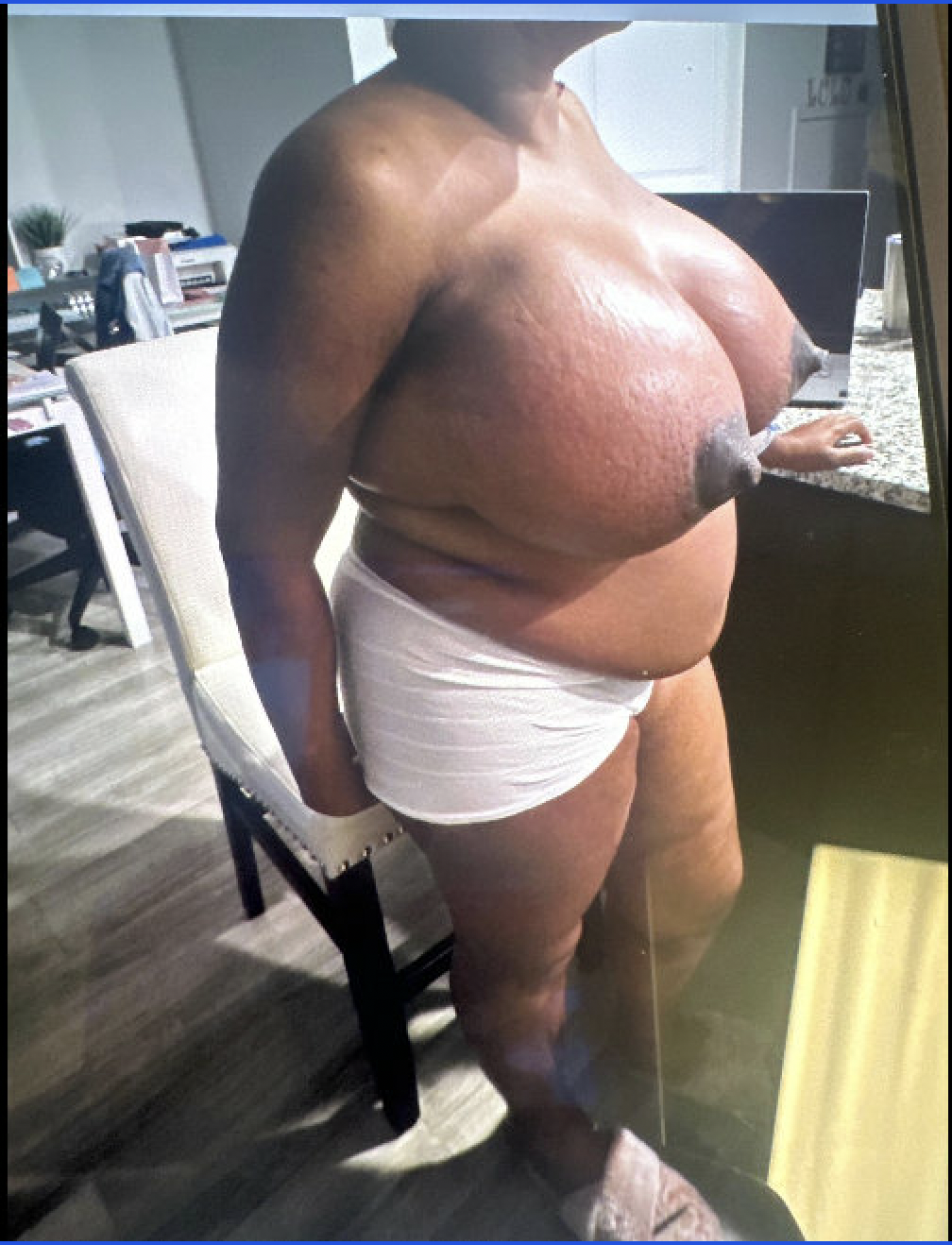
The woman in the photo above was 12 days post-birth when she presented to her NDC Accredited breastfeeding medicine physician with severe engorgement. The baby was born at 37 weeks gestation. This mother kindly agreed to having her case used to help other breastfeeding women. She told her breastfeeding medicine physician that she thought she was going to die - it felt as if her breasts were going to continue to swell and suffocate her. She also had significant swelling of her ankles and feet, due to pre-eclampsia which was being managed by her obstetrician. This patient described very substantial growth in her breasts during pregnancy. At the time of presentation she was only able to express 20 or so mls, and the baby wasn't coming onto the breast well or often. Her breasts were very firm and hard with a tail into the axillae. All the principles detailed in the article above were put in place once she saw the NDC Accredited breastfeeding medicine physician. In the consultation, the clinician helped her hand express a small quantity of milk. The patient also frequently leant over the sink with warm cloths or stood in a warm shower as she encouraged her milk to flow. She sometimes gently moved her breasts with the palms of her hands, without causing more pain. Once the engorgement resolved, her supply was not able to meet her baby's caloric needs, and she and her clinician then focussed on increasing milk production.
Recommended resources
Why advice to cease attempts at milk removal when engorgement is severe risks worsened outcomes [Case Study NDC Lactation Fellowship]
Engorgement: prevalence, presentation, pathophysiology
References
-
Zakarija-Grkovic I, Stewart F. Treatments for breast engorgement during lactation (review). Cochrane Database of Systematic Reviews. 2020(9):doi:10.1002/14651858.CD14006946.pub14651854.
-
Geddes DT. The use of ultrasound to identify milk ejection in women - tips and pitfalls. International Breastfeeding Journal. 2009;4(5):doi:10.1186/1746-4385-1184-1185.
-
Kujawa-Myles S, Noel-Weiss J, Dunn S, Peterson W, Cotterman KJ. Maternal intravenous fluids and postpartum breast changes: a pilot observational study. Inernational Breastfeeding Journal. 2015;10(18):doi:10.1186/s13006-13015-10043-13008.
-
Cotterman KJ. Reverse pressure softening: a simple tool to prepare areola for easier latching during engorgement. Journal of Human Lactation. 2004;20(2):227-237.