Growing collective knowledge in breastfeeding medicine: the necessity of dissent, integration of interrelated infant care domains, and how exclusion of colleagues holds back scientific advance
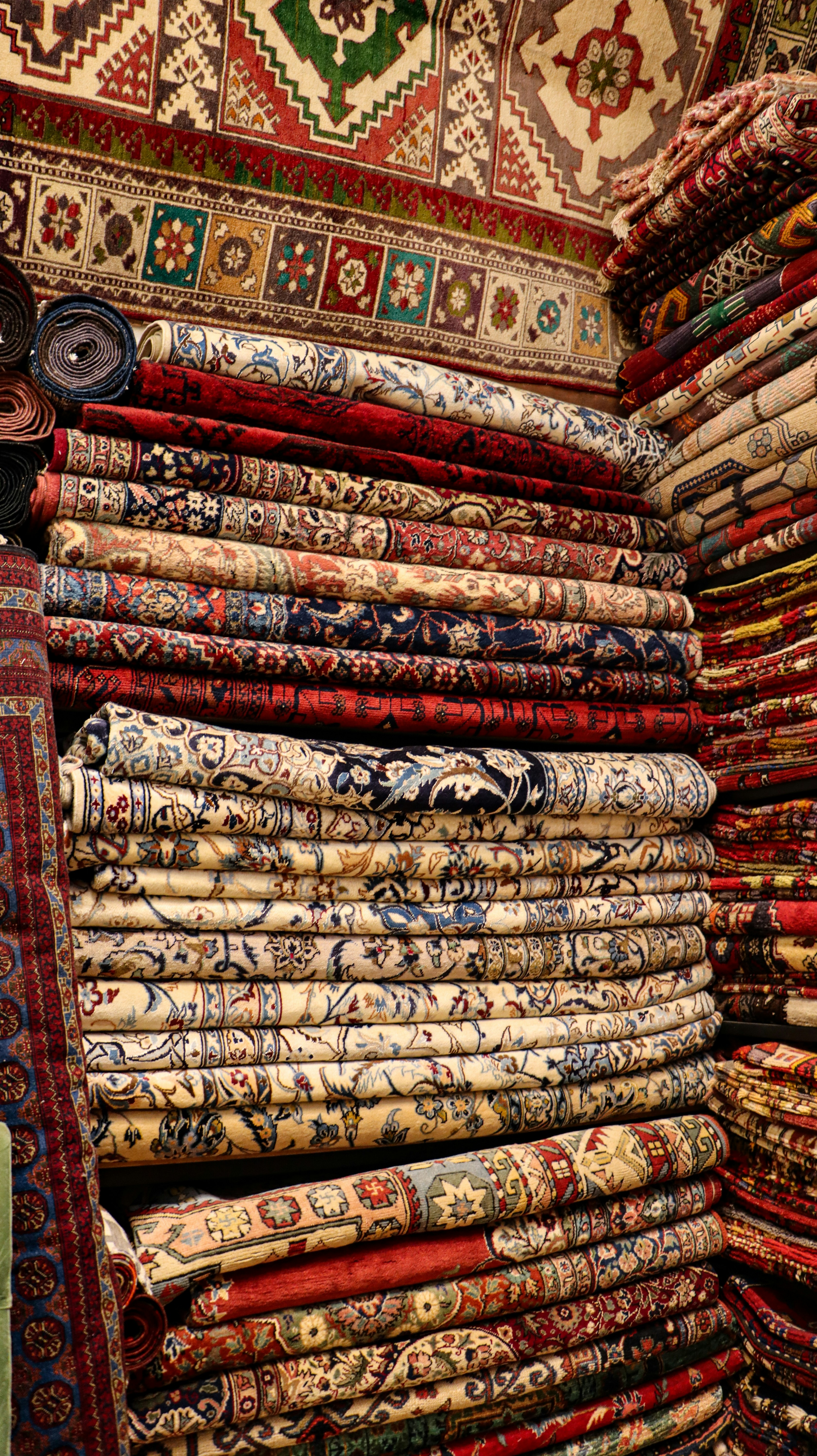
I love these images of hand-woven carpets, which speak to me of the creative power of collective human effort, weaving the future of our species.
The genius of Homo sapiens' collective intelligence
Over the past 300,000 years, Homo sapiens has flourished in a way that is unparalled by any other species, migrating across vast seas and land bridges and surviving at least two Ice Ages, to inhabit almost all of the land masses on the surface of the planet. We have been able to do this because of a unique human characteristic - our genius for the invention of technologies and the stunning and intergenerational accumulation of this collective intelligence, millenium after millenium.
Although the evolution of human knowledge about the world we inhabit is not entirely linear, because complex networks of knowledge and culture rise and fall, over all we humans belong in our bodies and our brains to a time-developmental universe (by that I mean, an evolving universe). We are driven into ever-greater complexity of technological mastery by our insatiable and innate Homo sapiens curiosity to innovate, experiment, explore.
With the advent of writing, which burst forth over the past 5,000 years in various independent locations, our capacity to store knowledge, share it, and pass it down the generations began to explode. Artificial intelligence is, some evolutionary biologists argue, an inevitable outcome of Homo sapiens' breathtaking capacity to build knowledge collectively.
The genius of Homo sapiens' collective intelligence in provision of healthcare
The evolution of knowledge in our contemporary healthcare systems is, needless to say, a brilliant collective gift which dramatically protects and extends human lives (if still shockingly inequitably applied around the planet). Today, the collective building of knowledge in health occurs through painstakingly developed systems of research and systems for building consensus clinical guidelines, within many different disciplines. These systems remain flawed, vulnerable to power dynamics and to co-optation by commercial interests - but nevertheless, at their best, our health systems illustrate Homo sapiens stunning genius for growing knowledge and tools, in the context of our extraordinary commitment to caring for each other.
There is an inherent conservatism to collective intelligence in health, which is an important protective mechanism. Yet because of our nature as evolutionary beings, this conservatism must (according to the laws of evolution) be constantly challenged by new perspectives, new interpretations, new models arising up outside the agreed consensus. This is how our collective human genius continues to evolve for the betterment of the health of humankind (and for the protection of the Earth). Optimising health outcomes is an increasingly urgent project as we face global health crises such as unsustainable health system costs, increasing overmedicalisation and overtreatment, market-driven co-optation of health system priorities, the health impacts of climate-driven extreme weather events, and war.
It's essential to welcome dissent and debate if we are to optimally support breastfeeding and lactation
Welcoming in debate, discussion, and dissent is absolutely vital if we humans of the 21st century are to continue to evolve the best possible care for breastfeeding women, their infants, and their families after centuries, perhaps millenia, of a patriarchal and coloniser devaluing and neglect. Disrupted trajectories during the highly developmentally plastic first weeks and months of life can result in disproportionately amplified and costly health impacts in later life.
The world's dominant breastfeeding non-profits, established in the USA in the 1980s, when I was a young doctor - have played a vital role in raising the awareness of the importance of breastfeeding for optimal health outcomes. These non-profit corporations emerged out of a period when Scientific Motherhood and a demeaning of lactation dominated the Industrial Scientific mindsets of the West. I remember how proud I was to qualify as one of the early adopter GP-IBCLCs in 1994. But three decades later, I see how the world's breastfeeding non-profits - now large US-dominated monopolies - actively hold back the advance of lactation medicine by excluding dissent and research, for ideological reasons. This is not science-based, nor aligned with our formidable human powers of intellectual and clinical evolution, and therefore has serious negative impact upon the wellbeing of breastfeeding families. In is not surprising that in this context, with researchers and researcher-clinicians banished along with their potential to act as a collective intellectual brake, resource-greedy overmedicalisation, paramedicalisation, and overtreatments now flourish in the care of mothers and babies.
The title of 'breastfeeding medicine' excludes
I remember when my medical IBCLC colleagues in Australia, back in the 2000s, didn't consider my work to belong in breastfeeding and lactation medicine. I think this was because I spoke about how the best way to improve breastfeeding rates was to change our clinical response to unsettled infant behaviour, proposing a multi-domain approach. Now, I note that Lactation Medicine as a subspecialty states that it includes special expertise in unsettled infant behaviour and also in various other domains of infant and parent care.
However, the name Breastfeeding Medicine, split off by virtue of its title from the domains of infant behaviour and development and perinatal mental health (though nevertheless forcefully claiming these as within its specific specialised expertise) inevitably fails to deeply engage whole fields of research, innovation, and clinical advance - because researchers and educators in these fields do not wish to be a part of a field which excludes some families according to mode of infant feeding.
In affluent societies, 21st century infants survive and thrive without breastfeeding (given our genius for developing and refining technologies like commercial milk formula). Infants cannot survive let alone thrive without sensory motor nourishment. They cannot survive without sleep. I worry that there is a hubris in the steps currently being taken to elevate the field of Lactation Medicine, once we consider the complexity of the biological system of a mother and baby - nested within family and society - from a genuinely integrative and holistic point of view.
Although it's often said that the breast is the only organ in the human body which (until recently) lacks its own medical subspecialty, breastfeeding requires two humans to function as a single biological system. Multiple organs are implicated. The way they interact together is biocultural and behavioural as well as physiological and biomechanical, which requires a different kind of subspecialty to one that focusses on a 'single organ'.
Unfortunately, the breastfeeding non-profits' ideologically driven practice of exclusion, targeting both individuals and organisations, is intentionally designed to harm those who are excluded and is therefore inconsistent with the principles of collegiate commitment to the wellbeing of other health professionals (a value increasingly explicit and nurtured within other subspecialties in medicine).
And by excluding formula-feeding families from its name, Breastfeeding and Lactation Medicine - most destructively of all - excludes those many families and infants who are not exclusively breastfeeding, or who are unable to breastfeed at all.
Neuroprotective Developmental Care offers an inclusive and integrative path forward to best possible support of breastfeeding and lactation
My vision for NDC from the 2000s has been that there needs to be an alternative path forward. It seems to me that by the time my great-grandchildren are giving birth to babies (should they choose to do so), there won't be a separate subspecialty within medicine called Lactation Medicine. Lactation Medicine will be subsumed, in this vision, into a subspecialty which provides Neuroprotective Developmental Care (or something similarly named), providing specialised training across the multiple infant care domains for those who care clinically for families with infants. In my vision, this specialised field will offer the highest possible levels of clinical competence, developed from research by implementation science, in what is (from an evolutionary perspective) the foundational domain of breastfeeding and lactation, since it interacts with each other infant care domain.
But an overarching title of 'Breastfeeding Medicine' or 'Lactation Medicine' will be avoided, because it excludes.
There's ample research to show us that this kind of societal exclusion ends up causing psychological harm to women, no matter how fiercely those leading the fields of lactation medicine and clinical lactation support protest that they are inclusive. And the exclusion of dozens of colleagues around the world who are as passionate about contributing to the advancement of breastfeeding and lactation as those Board and committee members of the breastfeeding non-profits who exclude them is intended to inflict personal collegiate harm. There's no evidence to suggest that ideologically motivated exclusion of colleagues improves the wellbeing of breastfeeding families, and every reason to think it is currently holding back innovation and advance. This is not faceless, nor is it accidental - most often, the excluded colleagues are quite well known to the excluders.
I look forward to a future where all health professionals who care for breastfeeding mothers, babies and their families live by the wisdom of scientist Robin Wall Kimmerer, who reminds us: "All flourishing is mutual."
Recommended resources
Possums Breastfeeding & Lactation articles which address lactation non-profits, ideology, and harm
Reference
Kimmerer, Robin Wall. The Serviceberry: Abundance and Reciprocity in the Natural World 2024